Translate

28 November 2012

Real Substile Penumbral Lunar Eclipse


Penumbral Lunar Eclipse 28.11.2012 Credit:
Click on picture to enlarge
 I had to post this. I think this is a fantastic picture showing the difference of this substile eclipse called Penumbral Lunar Eclipse. Thanks to Ian Musgrave down under who captured these great shots of the Moon being eclipsed.

Follow Ian at his Astroblog down under in Adelaide. He speaks about what to see in the night sky "what to see in the sky this week". Posts astronomy events and speaks about them with his personal experiences of them (like this one of the Penumbral Lunar Eclipse). great astronomy blog over all! Here is his link Astroblog.
For us here in Turku, Finland. We where clouded out! No signs of the Moon at all. No gaps in the clouds, just a thick cover of clouds. Oh well!

27 November 2012

Penumbral Eclipse of the Moon 28.11.2012


Click to see details of the Eclipse Nov. 28 2012
On November 28, 2012 there will be a Penumbra Eclipse of the Moon. The eclipse will be at it's greatest at 14:33 UT (17:33 Finland time). The eclipse will start at  12:14:58 UT (15:14:58 FIN) and will last for 4 hours 36 minutes and 05 secondes, 16:51:02 UT (19:51:02 FIN).

Look at the East as the Moon rises around 15:34 FIN time and follow the Moon until you can dicern a faint change in the darkness on the face of the Moon.

In a Penumbral eclipse, the Moon only enters the outer part of Earth's shadow. This will results in a subtle darkening of the Moon's northern half. You still have to have a good eyesight to see the differents with a "normal" Moon. Best chance is to photograph the event.

Good luck and clear skies! This a event not to miss!

24 November 2012

Mars Curiosity Rover preparing for Thanksgiving Activities


Curiosity at rocknest Credit: NASA/JPL-Caltech/Ken Kremer/Marco Di Lorenzo
Mission Status Report
PASADENA, Calif. -- NASA's Mars rover Curiosity completed a touch-and-go inspection of one rock on Sunday, Nov. 18, then pivoted and, on the same day, drove toward a Thanksgiving overlook location.
Last week, Curiosity drove for the first time after spending several weeks in soil-scooping activities at one location. On Friday, Nov. 16, the rover drove 6.2 feet (1.9 meters) to get within arm's reach of a rock called "Rocknest 3." On Sunday, it touched that rock with the Alpha Particle X-Ray Spectrometer (APXS) on its arm, and took two 10-minute APXS readings of data about the chemical elements in the rock. Then Curiosity stowed its arm and drove 83 feet (25.3 meters) eastward toward a target called "Point Lake."
"We have done touches before, and we've done goes before, but this is our first 'touch-and-go' on the same day," said Curiosity Mission Manager Michael Watkins of NASA's Jet Propulsion Laboratory, Pasadena, Calif. "It is a good sign that the rover team is getting comfortable with more complex operational planning, which will serve us well in the weeks ahead."
During a Thanksgiving break, the team will use Curiosity's Mast Camera (Mastcam) from Point Lake to examine possible routes and targets to the east. A priority is to choose a rock for the first use of the rover's hammering drill, which will collect samples of powder from rock interiors.
Although Curiosity has departed the Rocknest patch of windblown sand and dust where it scooped up soil samples in recent weeks, the sample-handling mechanism on the rover's arm is still holding some soil from the fifth and final scoop collected at Rocknest. The rover is carrying this sample so it can be available for analysis by instruments within the rover if scientists choose that option in coming days.
JPL, a division of the California Institute of Technology, Pasadena, manages the Mars Science Laboratory Project for NASA's Science Mission Directorate, Washington. JPL designed and built the rover.
More information about Curiosity is online at http://www.nasa.gov/msl andhttp://mars.jpl.nasa.gov/msl/ . You can follow the mission on Facebook at:http://www.facebook.com/marscuriosity and on Twitter at:http://www.twitter.com/marscuriosity .
Guy Webster 818-354-6278
Jet Propulsion Laboratory, Pasadena, Calif.
guy.webster@jpl.nasa.gov

21 November 2012

Direct Imaging of Exoplanet in constellation Andromeda


Direct imaging of exoplanet* Kappa Andromeda B
Credit: NAO/ Subaru/ J. Carson / T. Currie
Astrophysicists at the University of Toronto have discovered a new, huge exoplanet, 13 times bigger than Jupiter. It's in orbit round the massive star Kappa Andromedae, which is part of the constellation Andromeda. 
Kappa Andromedae is 2.5 times the size of our own sun, and at 170 light years away can be seen with the naked eye. The researchers used infrared images from the Subaru telescope in Hawaii to gather the faint images of the new planet.
"This planetary system is very different from our own," said Thayne Currie, a post-doctoral fellow in the Department of Astronomy & Astrophysics at the University of Toronto and co-author of the paper.
"The star is much more massive than our sun, and Kappa And b is at least 10 times more massive than any planet in the solar system. And, Kappa And b is located further from the star than any of the solar system planets are from the sun. Because it is generally much harder to form massive planets at large distances from the parent star, Kappa And b could really be a challenge for our theories about how planets form."
Direct imaging of planets outside our solar system is exceptionally rare, because the brightness of the host star nearly always obscures the planet from view. The team used a technique known as angular differential imaging to remove the overwhelming glare of  Kappa Andromedae. The resulting infrared image shows a tiny point of light that is Kappa And b.
"Although astronomers have found over 750 planets around other stars, we actually directly detect light from the atmosphere of only a few of them," explains Currie.
The discovery was a collaboration between astrophysicists at the University of Toronto and other institutions across the United States, Europe and Asia, as part of the Strategic Explorations of Exoplanets and Disks with Subaru (SEEDS) program.
The report on the super-Jupiter is published in the Astrophysical Journal Letters.

16 November 2012

Planet wandering through space without a parent star


Artist illustration of rogue planet
Astronomers using ESO’s Very Large Telescope and the Canada-France-Hawaii Telescope have identified a body that is very probably a planet wandering through space without a parent star. This is the most exciting free-floating planet candidate so far and the closest such object to the Solar System at a distance of about 100 light-years. Its comparative proximity, and the absence of a bright star very close to it, has allowed the team to study its atmosphere in great detail. This object also gives astronomers a preview of the exoplanets that future instruments aim to image around stars other than the Sun.

Free-floating planets are planetary-mass objects that roam through space without any ties to a star. Possible examples of such objects have been found before [1], but without knowing their ages, it was not possible for astronomers to know whether they were really planets or brown dwarfs — “failed” stars that lack the bulk to trigger the reactions that make stars shine.


But astronomers have now discovered an object, labelled CFBDSIR2149[2], that seems to be part of a nearby stream of young stars known as theAB Doradus Moving Group. The researchers found the object in observations from the Canada-France-Hawaii Telescope and harnessed the power of ESO’s Very Large Telescope to examine its properties [3].

13 November 2012

Total eclipse of the Sun explained.


Total eclipse of the Sun/ The diamond ring effect

"A total eclipse of the sun is one of nature’s most spectacular and awe-inspiring sights. For sheer beauty and magnificence, perhaps no celestial phenomena can compare with it", says Imelda Joson and Edwin Aguirre, two vivid eclipse chasers looking forward to the total eclipse of the Sun in Australia.
On Wednesday, Nov. 14, residents and visitors in Cairns, in Queensland, Australia, will witness the moon completely cover the sun for two minutes in the eastern sky an hour after local sunrise, provided the weather is clear (cloudy conditions could spoil the show). Because of the time zone difference, it will still be Tuesday afternoon (Nov. 13) in the United States during the total solar eclipse.
Cruise ships positioned farther east off the coast of New Caledonia and New Zealand will intercept the moon’s dark shadow, called the umbra, on the open waters of the South Pacific, giving passengers even longer durations of totality — up to 2.5 and 3.5 minutes, respectively. The eclipse will begin at 3:35 p.m. EST (2035 GMT) and last about 3.1 hours as the moon's shadow moves across Earth.
You can watch two live webcasts of the total solar eclipse here at SPACE.com beginning at 1 p.m. EST (1800 GMT).
If you have never seen a total solar eclipse before, here’s a list of eclipse events you can expect to seeduring the event, in chronological order:
First contact: This is the moment when the moon first takes a barely perceptible "bite" on the western edge of the sun, marking the official start of the eclipse. [How Solar Eclipses Work (Infographic)]
In Cairns, this occurs right after sunrise at local time on Wednesday (afternoon EST on Nov. 13), with the sun a mere 2 degrees above the eastern horizon. (Your closed fist held at arm's length covers 10 degrees of the sky.)
Vanishing crescent sun: Over the course of nearly an hour, the initial notch on the solar disk grows bigger and bigger as the moon continues to cover more of the sun. As the solar disk is reduced to a slender, rapidly dwindling crescent, look for pinhole images of the solar crescent projected by tiny spaces in between the leaves of a tree or shrub. The crescents can be seen on the ground or on any light-colored material, such as your T-shirt or notepad.
Fading daylight: About 15 minutes before totality begins, with about 80 percent of the sun now blocked, you’ll notice a drop in ambient light. As the partial solar eclipse deepens, daylight fades very quickly and dramatically. Shadows cast by the sun also appear much sharper. As totality nears, the surroundings lose much of their color, and the landscape takes on an unearthly grayish blue cast. [Video: Watch Path of Nov. 13-14 Total Solar Eclipse]
Dropping temperature: As more and more of the sun gets covered up, you may start to feel a slight cooling in the air.
Approaching lunar shadow: The moon’s dark shadow, called the umbra, which has been racing along Earth’s surface at up to several thousand kilometers per hour, is now rapidly closing in on your observation site. With 15 minutes to go before totality, the shadow now looms over the western horizon like a distant gathering storm.
Nature’s reaction: As day gradually turns to dusk, plants and animals usually behave as if night has fallen. Flowers close, birds stop singing, cows and chickens come home, and bats and nocturnal birds and fishes come out to feed. Soon everything becomes still and hushed in anticipation that something dramatic is about to happen.
Shadow bands: A few minutes before totality begins, the last rays of the sun are distorted by Earth’s turbulent atmosphere, producing wavy patterns of alternating light and dark bands that move quickly across the ground. (Many observers often miss this solar eclipse phenomenon since their attention is focused on the sun and not on the ground.) Shadow bands are notoriously difficult to photograph since they are faint and fast-moving. A white blanket or towel laid out on the ground will help you see (or videotape) them better.
Inner corona: Less than a minute before totality, you might be able to glimpse the brightest part of the sun’s outer atmosphere, called the corona, beginning to emerge. [Total Solar Eclipse of 2012 Explained (Gallery)]

Baily's beads  Credit: Fred Espenak 1995
Baily’s beads: These bright, rosary-like beads of sunlight — named after British astronomer Francis Baily who first reported them during an eclipse in 1836 — become visible up to 10 seconds or so before totality as the moon blocks the sun’s disk and sunlight continues to stream through deep valleys along the moon’s rugged edge.
Dazzling diamond ring:  As the last traces of the sun’s disk is covered by the moon, a solitary bead of sunlight remains shining briefly, creating a spectacular "diamond-ring" effect. People start to cheer, whoop, clap and cry.
Prominences and the chromospheres: At the same time, the thin, neon-pink layer of the sun’s atmosphere, called the chromosphere, becomes visible on the sun’s eastern edge. Any solar prominences present will also be seen protruding from behind the rapidly encroaching black disk of the moon.
Second contact: This heralds the moment when the diamond ring is finally extinguished and the sun is fully obscured by the moon. Total eclipse begins. Simultaneously, the dark lunar shadow that has been growing in the west rushes in and engulfs everything. You are now standing in the shadow cast by themoon a quarter of a million miles away. The moon’s inky disk set against the sun’s pearly white corona appears like an eerie black hole in the sky.
In Cairns, second contact occurs at 6:39 a.m. local time, with the sun 14 degrees high in the sky.
Outer corona: During the brief period of totality, the full extent of the sun’s corona is displayed in all its glory. Take note of the solar prominences and the overall shape and size of the corona, which vary from eclipse to eclipse. Try to discern fine details in the corona’s structure — such as long wispy streamers as well as delicate brushes, loops and arcs — which are delineated by the sun’s powerful magnetic field.
Twilight colors and darkness: The daytime darkness during totality doesn’t really get as black as at night. It resembles more of a deep twilight. While the sky surrounding the eclipsed sun is dark, all along the horizon the sky remains bright, bathed in a vivid yellowish orange glow. It’s like being surrounded by a 360-degree sunset.
Planets and stars: The brightest planets and stars typically come out in the minutes leading to totality and remain visible throughout the total eclipse. On Nov. 14, Venus should be fairly easy to spot west of the eclipsed sun. Mercury to the east and Saturn in between Venus and the eclipsed sun might be more challenging. Keen-eyed observers can also try to glimpse the stars Arcturus to the north and Alpha Centauri to the south.
Temperature drop: If you have a thermometer in the shade, you can measure how much the  temperature has decreased since first contact. Depending on the duration of totality and how high the sun is in the sky, the air temperature can dip by as much as 2 to 8 degrees Celsius (4 to 14 degrees Fahrenheit).
End of totality nears: You’ll know that the show is almost over when the western side of the corona begins to brighten, and the chromosphere and prominences become visible again.
Third contact: After a few minutes of totality, as the moon begins to uncover the sun, observers will see a single bead of sunlight burst forth in slow motion from behind a deep lunar valley, forming a magnificent diamond ring. The total eclipse is over, and another round of loud cheering and applause erupts from the crowd.
Over the next hour, the various stages of the eclipse repeat themselves, this time in reverse order and on the western side of the sun. The moon’s shadow races to the east as Baily’s beads reappear. The corona as well as the planets and stars fade from view.
Daylight returns very quickly, as if somebody had turned off the celestial dimmer switch. As the razor-thin sliver of the sun grows larger, shadow bands briefly come into view. Everything goes back to normal, including plants, animals and humans. The solar crescents continue to grow wider as the moon slowly moves away from the sun’s disk.
Fourth contact: At 7:40 a.m. local time, the moon leaves the sun’s disk completely as seen from Cairns. The last solar eclipse of 2012 is officially over. Time to celebrate!
Good luck and clear skies!

source: Imelda Joson and Edwin Aguirre are veteran eclipse chasers and photographers with 10 successful expeditions to date (eight totals and two annulars).

11 November 2012

Total eclipse of the Sun


Total Solar eclipse 14.11.2012  Credit: Fred Espenak
Scientists and sky watchers are converging on the northeast coast of Australia, near the Great Barrier Reef, for a total eclipse of the sun on November 14 2012. 

For researchers, the brief minutes (2 minutes) of totality open a window into some of the deepest mysteries of solar physics. As you can see in the video below, They asked Fred Espenak a Nasa Solar eclipse expert on a scale of 1 to 10, what would you classify a total solar eclipse? The answer, responded Espenak was a million. this is a show to not miss.

Here are some links for the Total Solar Eclipse of 14.11.2012 (local time) and a video showing how the eclipse will pass in Northern Australia and the Pacific ocean.


and the video

06 November 2012

Read the Carnival of Space #274


Welcome to another installment of The Carnival of Space!
Ray Sanders @ Dearastronomer.com is our host this week.

In this week’s carnival we have a number of articles about Astronomy and Space.
News from rover Curiosity and recent Mars exploration, Elon Musk's Dragon X exploits , the scale of spiral-shaped objects and more
Enter the Carnival of Space
 
If you have a science/space blog, joining The Carnival of Space is a good way to meet members of the Space/Science blogging community and help your site reach a wider audience.

If you'd like to be a host for The Carnival of Space, please send an email to carnivalofspace@gmail.com

26 October 2012

Exoplanets: New Space-Satellite will study Super Earths


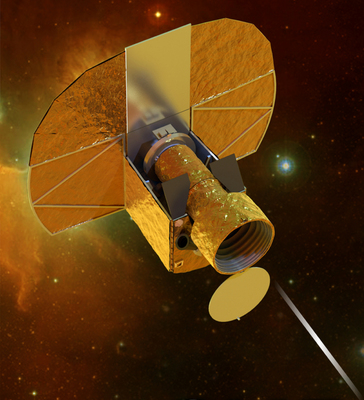
New Satellite to explore Exoplanets
PR 35 2012 - Studying planets around other stars will be the focus of the new small Science Programme mission, Cheops, ESA announced today. Its launch is expected in 2017.
 Cheops – for CHaracterising ExOPlanets Satellite – will target nearby, bright stars already known to have planets orbiting around them.


Cheops is the first of a possible new class of small missions to be developed as part of ESA’s Science Programme.

Through high-precision monitoring of the star’s brightness, scientists will search for the telltale signs of a ‘transit’ as a planet passes briefly across its face.
In turn, this will allow an accurate measurement of the radius of the planet. For those planets with a known mass, the density will be revealed, providing an indication of the internal structure.
These key parameters will help scientists to understand the formation of planets from a few times the mass of the Earth – ‘super-Earths’ – up to Neptune-sized worlds.
It will also identify planets with significant atmospheres and constrain the migration of planets during the formation and evolution of their parent systems.  
“By concentrating on specific known exoplanet host stars, Cheops will enable scientists to conduct comparative studies of planets down to the mass of Earth with a precision that simply cannot be achieved from the ground,” said Professor Alvaro GimĂ©nez-Cañete, ESA Director of Science and Robotic Exploration.
“The mission was selected from 26 proposals submitted in response to the Call for Small Missions in March, highlighting the strong interest of the scientific community in dedicated, quick-turnaround missions focusing on key open issues in space science.”
Possible future small missions in the Science Programme should be low cost and rapidly developed, in order to offer greater flexibility in response to new ideas from the scientific community.
With a dedicated science focus, they would provide a natural complement to the broader Medium- and Large-class missions of ESA’s Science Programme.
Cheops will be implemented as a partnership between ESA and Switzerland, with a number of other ESA Member States delivering substantial contributions.
Planet orbiting host Star

“This continues the 40-year success story of Swiss scientists and industry at the forefront of space science,” said Professor Willy Benz, Center for Space and Habitability at the University of Bern.
The mission will also provide unique targets for more detailed studies of exoplanet atmospheres by the next generation of telescopes now being built, such as the ground-based European Extremely Large Telescope and the NASA/ESA/CSA James Webb Space Telescope.
Cheops will operate in a Sun-synchronous low-Earth orbit at an altitude of 800 km. It has a planned mission lifetime of 3.5 years and part of the observing time will be open to the wider scientific community.

For further information, please contact:
ESA Media Relations Office

Communication Department

Tel: + 33 1 53 69 72 99

Fax: + 33 1 53 69 76 90

Email: media@esa.int

Source: ESA news
Pictures: Artist impression of cheops Credit: Uni. of Berne / Exoplanet orbiting Star Credit: CNES

It's snowing in Finland, White Turku!


First snow in Turku, Finland
(Click to enlarge photo)
I took a picture from the back balcony yesterday just for fun and today it started to snow, so I took a picture of the snowy backyard. Nice to see the difference. In about 1 hour it passed from left to right!

Enjoy the seasons, every one of them are precious and unique.

Clear winter skies for now.

23 October 2012

Astronomy club stories: Annual Astronomy Reunion 2012


Annual Astronomy Reunion cover picture
Credit: Stefan Lamoureux/KTY Toutatis
Ahlainen, Finland
The Annual Astronomy Reunion was held in Ahlainen, Finland a little village on the Baltic sea. These 2 days of retreat permitted us to reflect on the year that had past in our astronomy club and decide which way we will continue for the year to come. The mayhem of the arrival, food, provisions, equipment, and car unraveling proved to be more "relax" than the other years, which was a good sign.

The sky was full of stars and everybody just wanted to set their gear to what was happening in the night sky. Not long after, the sauna was hot and ready. Our friend who took care of the sauna had all ready set his camera to full mode startrail 1-2 hours and had no hurry to get to his camera.

This year we had one of the members "wife" with us, she is a friend and we know her well, but she is not into "astronomy" to much, so we left her in the upper cottage to watch some good old TV as we enjoyed the sauna.
As we were discussing astronomy and space with good refreshments in the sauna, we remembered that Felix Boomhauer as we called him (Felix Baumgartner/redbull Stratos) was attempting his jump from the edge of space. So in a heart beat, we had the computer outside on the window of the sauna and streaming the jump as it went. We saw when he jumped but we had to have a window-whipper every 2 seconds, in another word, Me! As I whipped the window from the humidity, Felix was falling to Earth. Great achievement!

As the night came to morning, the disco began and the festivities continued. My camera was clicking it's life away as i set it to timelapse mode with 35 seconds interval with an exposure of 30 seconds. I probably took a 1000 shots. My goal was to take a few nice timelapses of the night sky and within the shots a nice picture to remember the event. Of course half of the shots where blur as the lens took humidity over time. Never the less, i manage to take a couple of nice shots and little shorter timelapse than I anticipated.

The next day, we set our gears for more night action, but we soon realized that it would be cloudy and no chance of shooting the night sky. We sat in the warm cottage and talked the night through with good food and company. We attempted to go shoot  in another location 30 km from the cottage, but the clouds and strong winds where there as well. So we called it a day.

The Annual Astronomy Reunion was very nice even if the second day I went to sleep early. I enjoyed every moment of it and hope to go to next's year reunion. I invite you to look at our pictures on our gallery HERE
Thank you guys! it was precious!

Watch new astrophotos Annual Astronomy Reunion 2012 HERE

22 October 2012

Watch pictures of Meteor Showers around the World


Orionids Meteor Shower 2012
Credit: Tommy Eliassen
Photographer Tommy Eliassen captured this spectacular view of an Orionid meteor streaking through the dazzling northern lights and Milky Way from his camp in Korgfjellet, Hemnes, Norway, on Oct. 20, 2012, during the peak of the 2012 Orionid meteor shower.

Check out these fabulous shots of the Orionid meteor shower around the world on Space.com HERE

In Southern Finland we only had drizzle and rain. We hope for the next meteor shower to have clear skies and be able to take pictures of the event.


19 October 2012

Orionid Meteor shower 2012. Catch them if you can!


Orionid Meteor Shower peaks this year on Oct. 21. 2012
ORIONID METEOR SHOWER: Next weekend, Earth will pass through a stream of debris from Halley's Comet, source of the annual Orionid meteor shower. Forecasters expect ~25 meteors per hour when the shower peaks on Oct. 21st.
Meteor Shower can be impressive and a light tripod with a camera DSLR can give you nice pictures of the event. A group of friends and a darker place can give you the joy of your life time.
Be sure to not miss them. 

Read more on the Orionids on Wikipedia 

17 October 2012

Breaking news: Exoplanet found in nearest Star system of Earth. We are getting closer!


Rendering of Exoplanet orbiting it's host Star
Image Credit: G. Bacon

European astronomers have discovered a planet with about the mass of the Earth orbiting a star in the Alpha Centauri system — the nearest to Earth. It is also the lightest exoplanet ever discovered around a star like the Sun. The planet was detected using the HARPS instrument on the 3.6-metre telescope at ESO’s La Silla Observatory in Chile. The results will appear online in the journal Nature on 17 October 2012.

16 October 2012

Read the Carnival of Space #271

Welcome to another installment of The Carnival of Space!
Brie Allen @ Tranquility Base's blog is our host this week.

In this week’s carnival we have a number of articles about Astronomy and Space.
Google + hangout this week, Space X recent mission, Martian reptile scales and more
 
If you have a science/space blog, joining The Carnival of Space is a good way to meet members of the Space/Science blogging community and help your site reach a wider audience.

If you'd like to be a host for The Carnival of Space, please send an email to carnivalofspace@gmail.com

05 October 2012

Ganymede shot through camera as an exoplanet


Jupiter and its moon Ganymede (Click to enlarge)
credit: Astronomy Club toutatis
Ganymede is a satellite of Jupiter and the largest moon in the Solar System. It is the seventh moon and the third Galilean moon outward from Jupiter.

The image you can see is of Jupiter and its moon Ganymede that is just beside it.
( right side: Photo / left side: Stellarium Star map).
The lower "dot" is Iota Taurus, a star in the constellation Taurus and an outlying member of the Hyades star cluster.
This photo has been taken with a 40 mm lens on a canon 550D in a city lighting.  Ganymede  is Completing an orbital period of 7,15455296 days, so next Monday the planet should be at the same spot. Therefore I will try to photograph the Planet and moon and see if it is at the same spot. These pictures are crude, but none the less fun and accurate and could be interpreted as an exoplanet orbiting it's host Star. This open debates and helps to imagine ways to see other world around parent Stars, in this case the planet Jupiter.

Ganymede has a diameter of 5,268 km (3,273 mi), 8% larger than that of the planet Mercury, but has only 45% of the latter's mass. Its diameter is 2% larger than that of Titan, the second largest moon. It also has the highest mass of all planetary satellites, with 2.02 times the mass of our Moon.

Many probes flying by or orbiting Jupiter have explored Ganymede more closely, including four flybys in the 1970s, and multiple passes in the 1990s to 2000s. The most recent spacecraft to explore Ganymede up close was New Horizons, wich passed in 2007 on its way to Pluto. New Horizons made topography and composition maps of Ganymede as it sped by.

Next Monday I will attempt to photograph Jupiter and confirm (or not) that in fact Ganymede is orbiting it's host planet in roughly 7 days. Stay tuned!

Images: Jupiter and Ganymede Credit: Astronomy Club Toutatis, animation of the Laplace resonances of Ganymede, Europa and Io.
Source: Wikipedia, Nasa
Links: Ganymede, Iota Taurus, Exoplanets, New Horizons, Laplace resonances

04 October 2012

The Australian Square Kilometer Array ready for action!


The Australian Square Kilometer Array Pathfinder
Credit: Alexander Cherney
The Australian Square Kilometer Array Pathfinder (ASKAP) is made up of 36 identical antennas, each 12 meters in diameter spread out over a large distance, but working together as a single radio telescope.
The Square Kilometer Array is built at the Murshison Radio-astronomy Observatory site, located near Boolardy in the Mid West region of Western Australia.
Another Square Kilometer Array project is being built in South Africa joining the ASKAP.

The capabilities of the ASKAP is design to address a wide range of questions in astrophysics, cosmology and particle astrophysics as well as extending the range of the observable universe. One innovative development is the use of a Focal Plane Array using phased-array technology to provide multiple field of views. This greatly increase the survey speed of the ASKAP and enable multiple users to observe different pieces of the sky simultaneously.

Alexander Cherney had the privilege to shoot and capture on camera the arrays and make up a real cool timelapse of the Square Kilometer Array. Here are his impressions, It was an unforgettable experience - I stayed at the telescope during the day, helped scripting and testing the antenna movement for the night with CSIRO scientist Maxim Voronkov and just enjoyed the remote location with no mobile phones.

Watch Alexander's timelapse as he took 19,960 images with 3 cameras in 5 unforgettable nights at the Australian Square Kilometer Array Pathfinder in Australia.


Visit Alexander Cherney website Terrastro.com
Source: Wikipedia / Terrastro
Image and timelapse: Alexander Cherney

02 October 2012

Watch Live: A day in the life of the Very Large Telescope (VLT)


Ever wonder what takes place on a daily basis at one of the premier ground-based observatories? The European Southern Observatory (ESO) is celebrating its 50th anniversary and it is opening it's doors to us.
Be part of this excellent opportunity and festivities.

Read Nancy Atkinson's article on Universe today HERE

26 September 2012

Hubble goes to the eXtreme to assemble the deepest ever view of the Universe


The eXtreme Deep Field, or XDF, the photo was assembled
by combining ten years of NASA/ESA Hubble Space
Telescope observations taken of a patch of sky
within the original Hubble Ultra Deep Field.
Like photographers assembling a portfolio of their best shots, astronomers have assembled a new, improved portrait of our deepest-ever view of the Universe. Called the eXtreme Deep Field, or XDF, the photo was assembled by combining ten years of NASA/ESA Hubble Space Telescope observations taken of a patch of sky within the original Hubble Ultra Deep Field. The XDF is a small fraction of the angular diameter of the full Moon.
The Hubble Ultra Deep Field is an image of a small area of space in the constellation of Fornax (The Furnace), created using Hubble Space Telescope data from 2003 and 2004. By collecting faint light over one million seconds of observation, the resulting image revealed thousands of galaxies, both nearby and very distant, making it the deepest image of the Universe ever taken at that time.
The new full-colour XDF image is even more sensitive than the original Hubble Ultra Deep Field image, thanks to the additional observations, and contains about 5500 galaxies, even within its smaller field of view. The faintest galaxies are one ten-billionth the brightness that the unaided human eye can see [1].

24 September 2012

Carnival of Space #268 Here at LINKS THROUGH SPACE


Welcome to Links Through Space, astronomy for everyone.
This is the blog of our Astronomy Club here in Kustavi, Finland
We write/post news about space related topics and we showcase our Astrophotos and Timelapses.
Our blog is a way for you to follow Space/Astronomy news and find new links through the Internet about Space and astronomy.

So here we have it, Ladies and Gentlemen!
Links Through Space is honored to declare the 268th Carnival of Space live from Kustavi Finland.
 OPEN!